
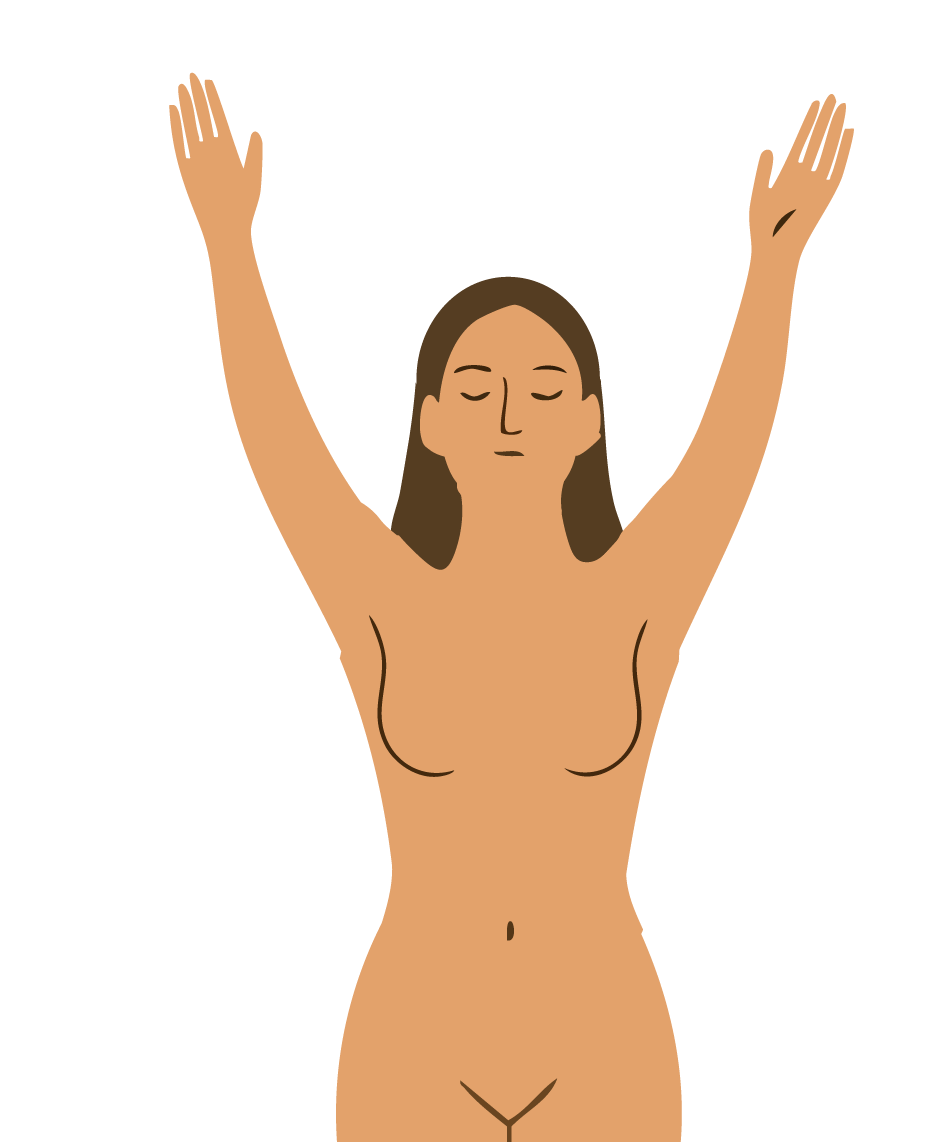
Touch is the sense of bodily contact. Pressure, texture, temperature, vibration, weight, pain, movement, and the felt boundary between self and world. Touch is the sense that does not keep distance politely. It meets.
The sense of contact
Touch is fundamental because it tells the body where it ends and where the world begins – and then complicates that boundary immediately. A hand touches fabric. A shoulder receives comfort. A child is held. A wound hurts. A lover reaches. A stranger stands too close. A room feels cold. The body learns through contact.
The somatosensory system processes events in direct contact with the organism. That directness gives touch its force. Sight can look away. Sound can fade. Touch arrives at the border.
In brief
- Touch includes pressure, texture, temperature, vibration, pain, movement, and bodily contact.
- It is closely related to haptics, skin, proprioception, intimacy, and body awareness.
- Touch can soothe, inform, arouse, protect, harm, violate, or repair.
- Because touch crosses bodily boundary, it is inseparable from consent.
Active touch
Touch is not only something that happens to the skin. It is often exploratory action. The hand presses, traces, weighs, tests, strokes, grasps, withdraws. We learn the world by moving into contact with it. A craftsperson knows material through pressure. A cook knows dough by resistance. A dancer knows the floor. A blind reader knows raised dots as language.
This is why touch belongs at the center of sensual knowledge. It refuses the idea that knowing is always distance. Sometimes knowledge requires contact.
Touch and intimacy
Touch can communicate what language cannot carry: tenderness, reassurance, invitation, grief, welcome, desire, care. It can also communicate threat, entitlement, domination, intrusion, or contempt. The same gesture can mean entirely different things depending on relationship, timing, culture, history, and consent.
A sensual culture must therefore be touch-literate. Not touch-starved into desperation. Not touch-fearful into exile. Touch-literate: able to ask, sense, wait, refuse, offer, receive, and repair.
The Sensual Institute perspective
The Sensual Institute treats touch as one of the great tests of sensual ethics. Touch asks whether contact can honor both aliveness and boundary. The hand that waits may be more sensual than the hand that takes.
Explore with I AWAKE
To explore what happens when you receive touch and care, see I Want to Be Touched, a guided sensual seven-day journey by Camilla Wellton.
For a short definition, see receiving in the I AWAKE glossary
Further reading: Why Warmth Can Feel More Dangerous Than Distance
Related entries
skin, haptics, texture, intimacy, consent, body-awareness, proprioception, pain, massage, sensuality.