
Du säger något tydligt: ”Jag vill inte alltid vara den som föreslår när vi ska ses. Kan du ta initiativ nästa gång?” Den andra personen lyssnar och svarar ja. Det är en fin stund, kanske till och med en lättnad. Två veckor senare har inget förslag kommit. Du undrar om du ska påminna, vänta eller dra slutsatsen att du har begärt för mycket. Nu handlar frågan inte om att hitta de perfekta orden. Du har redan sagt dem.
I Jag vill ha mer än smulor, den svenska ingången till Living on Love Crumbs i The Sensual Hero’s Journey™, blir skillnaden mellan kontakt och att känna sig mött viktig. Ett vänligt ja kan vara uppriktigt när det sägs och ändå inte leda till det ni talade om. Ett initiativ som aldrig tas är inte samma sak som ett initiativ som föreslås och blir av.
Det är lätt att fastna i två tolkningar. Antingen var jaet ett löfte och tystnaden ett bevis på att du inte betyder något. Eller så var jaet varmt och därför borde du vänta utan att nämna saken igen. Båda tolkningarna går längre än det du ännu vet. Du vet vad du bad om, vad den andra svarade och vad som sedan hände. Börja där.
Prova att skriva ned en enda händelse utan att räkna poäng. ”Jag bad dig föreslå när vi skulle ses nästa gång. Du sade ja. Nu har två veckor gått utan ett förslag.” Meningen säger inget om den andras motiv. Den ger däremot en grund för ett nytt samtal: var detta möjligt att ta ansvar för, eller svarade den andra ja på något den inte avsåg att göra? Om du i stället säger ”du vill aldrig träffa mig” kanske ni börjar diskutera avsikter i stället för handlingar.
Nästa steg är att göra behovet begripligt. Vad skulle du märka om den överenskommelsen faktiskt bars av er båda? Ett eget förslag inom en rimlig tid? Ett ärligt besked om den andra inte vill eller kan? Det behöver inte vara en lista med villkor som ska uppfyllas perfekt. Det är ett språk som gör det möjligt att pröva om ni båda förstår vad du ber om.
Det finns en risk att precision blir ett nytt sätt att ta hela arbetet själv. Du ska inte behöva formulera dig perfekt för att ditt behov ska räknas. Den andra personen har också ansvar att lyssna, fråga och återkomma. Om du gång på gång behöver översätta samma behov till allt mindre och snällare ord är själva mönstret relevant information. En tydlig begäran garanterar inte ett gensvar; den gör det möjligt att se vad som händer när behovet blir synligt.
Den kostnadsfria guidade övningen När det nästan räcker hos Sensual Institute låter dig undersöka en specifik stund: vad som hände, vad du hoppades att det skulle betyda och vad du faktiskt behöver. Hitta resursen under Gratis resurser på Sensual Institute och följ produktsidan. Övningen ber dig inte döma hela relationen utifrån ett enda uteblivet förslag. Den hjälper dig att se en skillnad du kanske har behövt språk för.
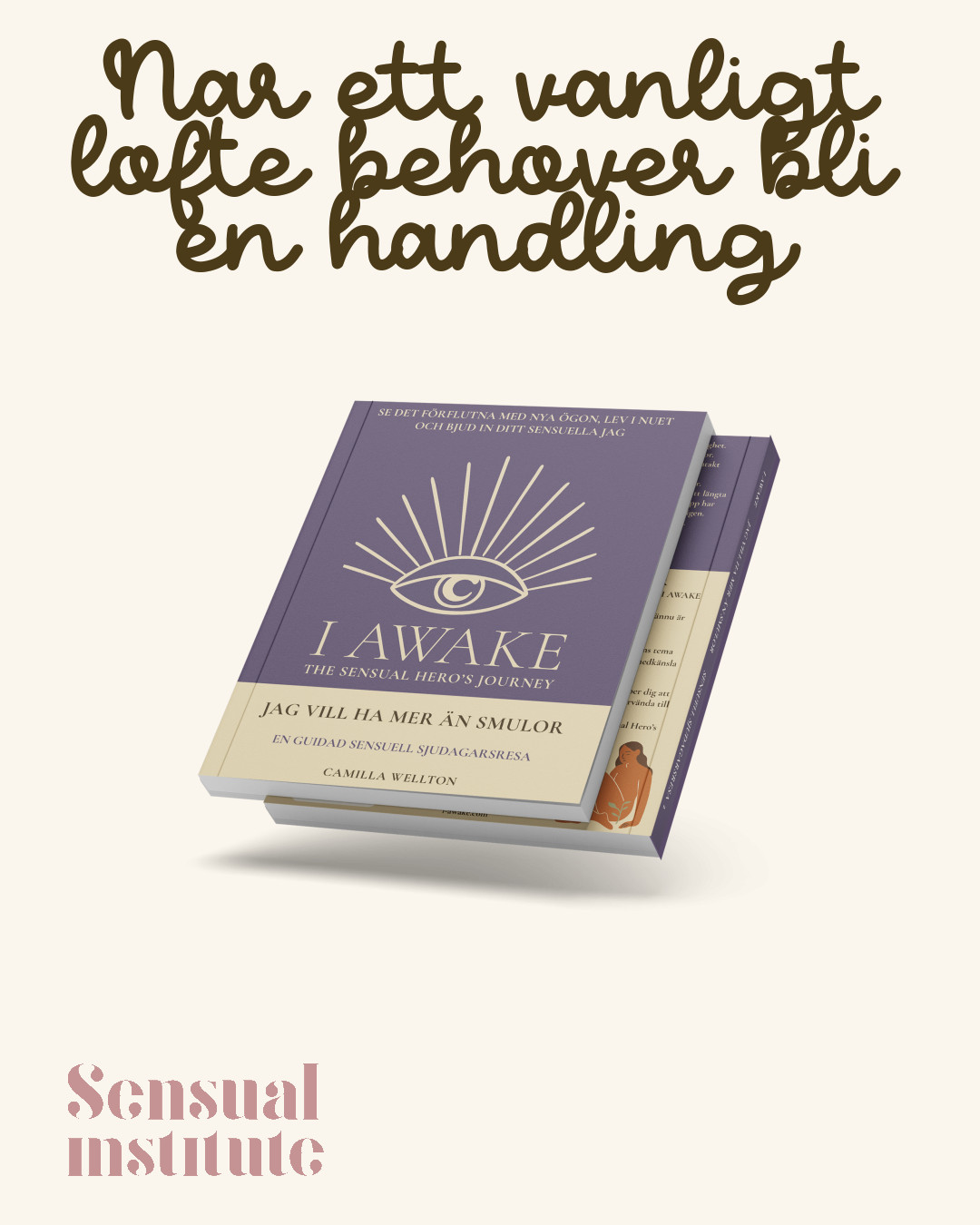
Vill du följa frågan längre kan du utforska Jag vill ha mer än smulor i I AWAKE. Boken ger en längre guidad resa genom längtan, behov och ömsesidighet. Den kostnadsfria övningen kan vara början; boken ger plats för mönstret över mer än en enda händelse.
Det kan kännas ovant att säga: ”Jag uppskattade ditt ja, och jag behöver veta om du fortfarande menar det.” Men båda leden behövs för att du och den andra personen ska kunna möta det som faktiskt är sant.
You say something clear: “I do not want to be the one who always suggests when we meet. Could you take the initiative next time?” The other person listens and says yes. It is a good moment, perhaps even a relief. Two weeks later, no invitation has come. You wonder whether to remind them, wait, or decide you asked too much. The problem is no longer finding perfect words. You have already said them.
In Living on Love Crumbs, part of The Sensual Hero’s Journey™, the difference between contact and feeling met becomes important. A kind yes may be sincere when spoken and still not lead to what you discussed. An initiative never taken is different from a suggestion offered and carried through.
It is easy to reach for two interpretations. Perhaps the yes was a promise and the silence proves you do not matter. Or perhaps the yes was warm, so you should wait without ever mentioning it again. Both interpretations go beyond what you know. You know what you asked, what they answered and what happened afterward. Begin there.
Try writing down one event without keeping score. “I asked you to suggest when we might meet next. You said yes. Two weeks have passed without a suggestion.” The sentence makes no claim about motive. It gives you a ground for another conversation: was this something they could take responsibility for, or did they say yes to something they did not intend to do? “You never want to see me” might turn the conversation toward intentions instead of actions.
The next step is to make the need understandable. What would you notice if the agreement were actually carried by both of you? A proposal within a reasonable time? An honest answer if they cannot or do not want to do it? This need not become a list of conditions to be fulfilled perfectly. It is language that lets both people test whether they understand what is being asked.
There is a risk that precision becomes another way to carry all the work yourself. You should not need perfect phrasing for your need to count. The other person also has a responsibility to listen, ask and return to the conversation. If you repeatedly have to translate the same need into smaller, gentler words, that pattern is itself relevant information. A clear request cannot guarantee a response; it lets you see what happens once the need is visible.
The free guided Almost Test at Sensual Institute helps you examine one specific moment: what happened, what you hoped it meant and what you still need. Find it under Free Resources at Sensual Institute and follow the product page. The practice does not ask you to judge a whole relationship from one missing invitation. It helps name a distinction you may have needed.
To stay with the question longer, explore Living on Love Crumbs at I AWAKE. The book offers a longer guided journey through longing, needs and reciprocity. The free practice can be a beginning; the book gives room to a pattern across more than one event.
It may feel unfamiliar to say, “I appreciated your yes, and I need to know whether you still mean it.” Both parts are necessary if you and the other person are to meet what is actually true.