
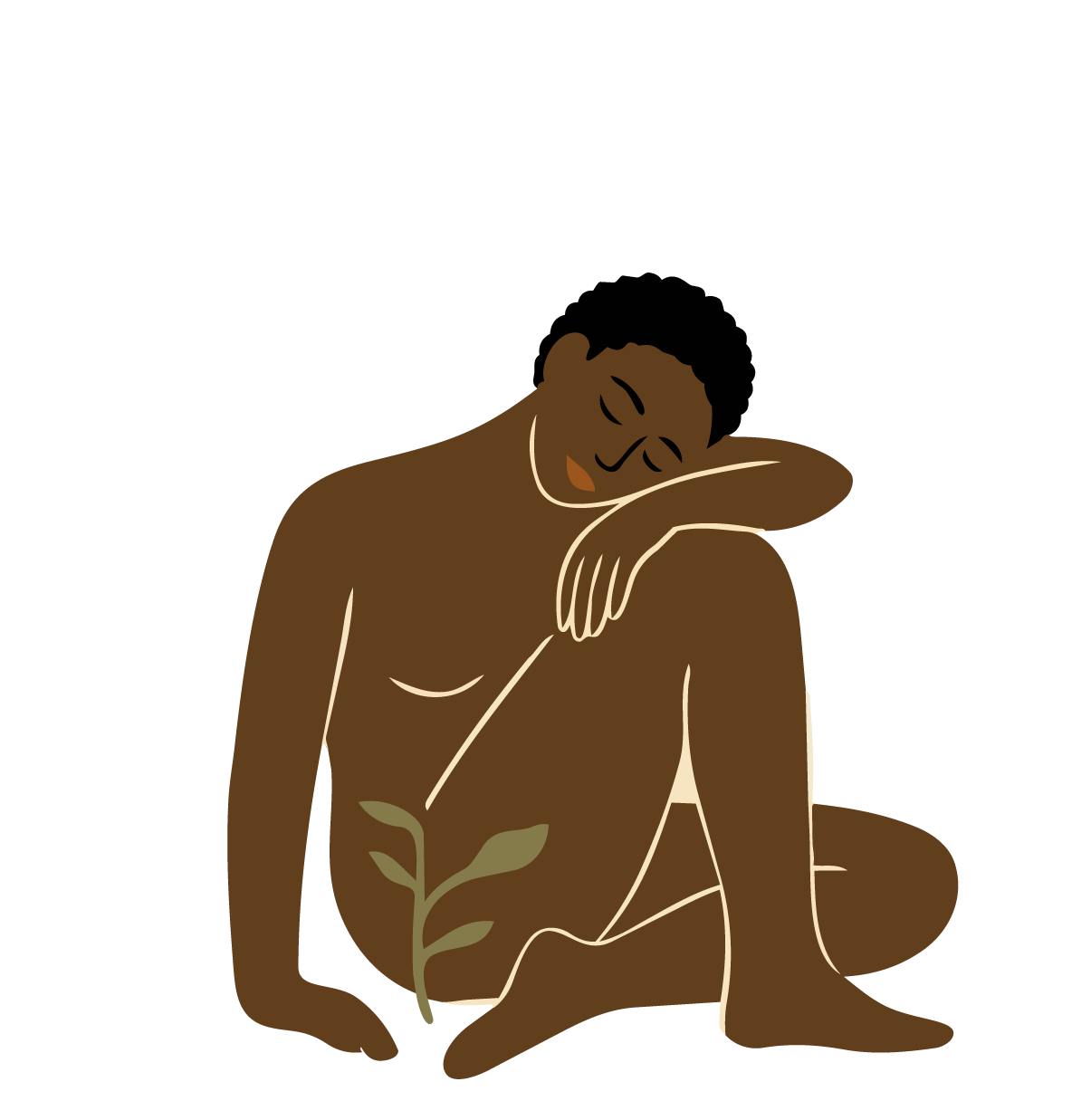
Lineage names a relationship of continuity across generations, communities, practices, places, and values. It may refer to family descent, cultural transmission, artistic influence, political movements, chosen kin, or the people whose work made a life more possible.
Lineage is not a straight line. It can contain breaks, crossings, adoption, migration, refusal, loss, and reinvention. Sensual life carries lineage through bodies, gestures, food, music, language, touch, aesthetics, and ways of caring.
Lineage and ancestry
Ancestry often describes relationship to people and places before the present, while lineage can include the living paths through which knowledge and values continue. The terms overlap, but neither should be reduced to biology.
A person may have multiple lineages or feel uncertain about one. Uncertainty does not make belonging false. It may be an honest response to adoption, displacement, secrecy, migration, or disrupted records.
Lineage and identity
Lineage can offer a story in which identity has depth and context. It may help a person understand a name, practice, body, community, or relationship to place. It can also impose expectations about loyalty and representation.
People have the right to define how much lineage shapes public identity. A person can honour a lineage privately, claim a partial connection, or build a different life without being accused of betrayal.
Lineage and the body
Lineage is often felt through repetition: a familiar gesture, voice, rhythm, recipe, movement, or response to care. Bodies can carry both resource and burden across generations.
Embodied lineage is not biological destiny. A person can learn a new pattern, use support, change a practice, or refuse an inherited account of what bodies are for. The body remains capable of authorship.
Lineage and culture
Cultural lineage moves through language, art, ritual, clothing, food, story, work, and relationship to land. These forms may be ordinary rather than formally preserved, yet they carry complex knowledge.
Approaching another lineage requires context and humility. A person should not extract a form from its community and claim its meaning alone. Credit, permission, reciprocity, and accountability are part of respectful participation.
Lineage and power
Lineage has been used to create hierarchy through purity, citizenship, inheritance, caste, race, gender, and claims to land. A person may be told that their lineage makes them entitled to resources or authority over others.
An ethical account recognises history without turning descent into a measure of human value. Responsibility can accompany privilege, but no lineage makes a person inherently superior.
Lineage and chosen connection
People can enter lineage through mentorship, friendship, art, activism, care, and shared practice. A teacher, elder, movement, or community may become part of a person’s continuity even without biological relationship.
Chosen lineage is not an imitation of family. It can offer forms of belonging that are more honest, accessible, and sustaining than inherited structures. It can also be revised when it becomes controlling.
Lineage and rupture
Lineage may be interrupted by violence, assimilation, displacement, death, estrangement, or institutional destruction. Rupture can create grief and uncertainty, but it does not erase every trace of connection.
Rebuilding may involve archives, language learning, ritual, community, therapy, land relationship, or creative work. Reconnection is not always possible or wanted. A person can make a meaningful life without recovering every lost link.
Lineage and repair
Repair asks what a lineage has received and what it has caused. Families, institutions, and communities can acknowledge harm, return resources, change stories, protect descendants, and create conditions different from those inherited.
Repair may change the lineage itself. A tradition can become more truthful by admitting who was excluded and by making room for those previously denied authority.
Lineage and transmission
Lineage travels through teaching, imitation, story, object, gesture, practice, and care. A person may learn a way of preparing food, greeting someone, moving through a room, responding to grief, or making pleasure through repeated participation.
Transmission is never exact. Each generation receives a form and changes it through its own bodies and conditions. Variation can be evidence that a lineage is alive, not that it has been abandoned.
Lineage and cultural authority
Some lineages carry responsibilities that cannot be claimed simply through interest or distant association. Cultural authority may be held by elders, communities, practitioners, or people with direct relationship to a place and practice.
Respect involves asking who may speak, teach, record, perform, or adapt. A person can appreciate a form while accepting that they are not entitled to reproduce it publicly.
Lineage and privilege
Lineage can transmit privilege through land, wealth, status, safety, education, and access to institutions. It can also transmit exclusion and vulnerability. An honest lineage story includes both what was protected and what was made possible through other people’s dispossession.
People who inherit advantage can use it to widen access, support repair, and challenge the rules that made advantage appear natural. Responsibility is a way of changing the direction of continuity.
Lineage and rupture
Migration, violence, assimilation, adoption, secrecy, illness, death, and institutional destruction can interrupt lineage. The break may be felt through missing language, unknown names, altered practices, or a body that does not know where it belongs.
Rupture does not require a person to invent certainty. They may build a life with fragments, chosen relationships, new practices, and respect for what cannot be recovered.
Lineage and sensual pleasure
Lineage can be felt through the pleasures that survive: a flavour, rhythm, fabric, scent, joke, dance, garden, song, or style of touch. These forms connect the present body with people who are no longer present.
Pleasure may also become a site of reinvention. A person can make a new form that acknowledges where it came from while refusing the limits that accompanied it.
Continuity can include creative departure.
It can remain connected without remaining identical.
What this changes
Lineage becomes a living field of continuity, difference, and responsibility. It can be inherited, chosen, interrupted, and remade through bodies, practices, relationships, and memory. Connection is meaningful when it leaves room for freedom.
The next useful entries are ancestry, inheritance, identity, memory, community, and heritage.
Related entries
ancestry, inheritance, identity, memory, community, heritage, legacy.