
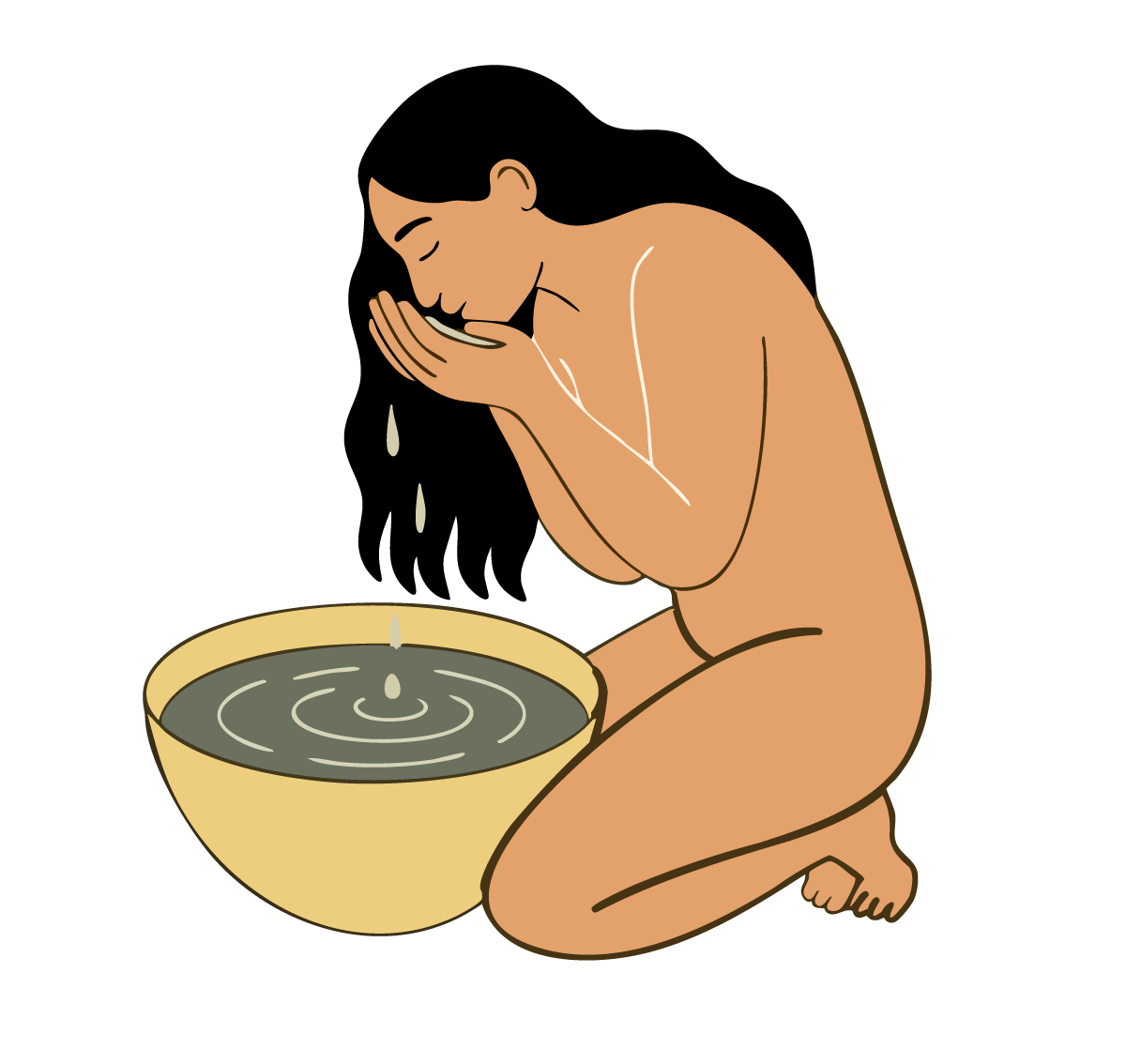
Awe is an embodied response to perceived vastness and the need to revise one’s understanding. Vastness may be physical, temporal, social, intellectual, spiritual, or emotional. A night sky, a coastline, music, collective action, birth, grief, architecture, or a scientific idea can all exceed the frame a person was using.
Awe can feel pleasurable, frightening, humbling, beautiful, disorienting, or quiet. It is not automatically good or truthful. Its power makes discernment important: intensity can open perception, but it can also be used to demand obedience.
Awe and the body
Awe may slow movement, alter breathing, raise the hairs on the skin, bring tears, or create a sense of expanded space. These responses are part of the body’s attempt to meet something larger than its current expectation.
Not everyone experiences awe through the same sensory route. One person may feel it through sound, another through touch, pattern, language, memory, or collective rhythm. No single emotional display proves that awe is present.
Awe and vastness
Vastness does not have to mean physical size. A long history, a complex ecosystem, a community’s endurance, a person’s interior life, or an unexpected act of generosity can exceed ordinary scale. Awe may arise when the mind recognises that an encounter cannot be reduced to one familiar category.
Vastness can invite humility without requiring self-erasure. A person remains valuable while recognising that they are part of a larger field. Humility is not submission to every authority that claims to be larger.
Awe and nature
Nature often evokes awe through scale, pattern, interdependence, weather, growth, and vulnerability. Such experiences can strengthen attention to the more-than-human world. They can also become romantic when people ignore the labour, displacement, and environmental conditions that make access to nature unequal.
Ethical awe does not stop at feeling moved. It can lead to care, restraint, restoration, and political attention. Admiring a landscape while accepting its destruction creates a gap between sensation and responsibility.
Awe and art
Art can create awe by reorganising time, scale, sound, colour, language, or movement. A work may make a familiar experience newly visible or connect private feeling with collective history. The response belongs partly to the encounter and partly to the person’s own memory.
Artistic awe should not be confused with reverence for institutions. A museum, teacher, artist, or critic can offer context without owning the audience’s response. Access to interpretation should enlarge participation rather than establish hierarchy.
Awe and community
Collective singing, mourning, protest, ceremony, sport, dance, and shared care can create a sense of being part of something larger. This form of awe can reduce isolation and remind people that individual life is supported by relationships.
Collective intensity has risks. Groups can use awe to suppress dissent, idealise leaders, or make belonging conditional on surrender. Ethical community leaves room for questions, difference, exit, and repair.
Awe and power
Institutions often create awe through architecture, ceremony, uniforms, language, and scale. These forms can orient people, but they can also make authority appear natural and unquestionable. A sensual response to grandeur should not be mistaken for evidence of legitimacy.
People with power should avoid using emotional intensity to bypass consent. A moving speech, spiritual experience, or erotic atmosphere does not remove the need for clear information and free choice.
Awe and meaning
Awe can change a person’s sense of what matters. It may make daily concerns feel smaller or reveal their connection to a larger story. This shift can be restorative, but it should not be used to dismiss practical needs or personal pain.
Meaning after awe is made through interpretation and action. A person can ask what the encounter invites, what it asks them to protect, and what remains true when the intensity fades.
Awe and safety
Vastness can be overwhelming. People may need grounding, companionship, clear exits, or time to recover after an intense experience. A person who does not want awe is not closed to life. Predictability can be a meaningful form of care.
Creating awe ethically includes warning people about intensity and respecting their choice not to participate. The possibility of wonder should never become an excuse to override a body’s limit.
Awe and integration
Awe can leave a person changed in small ways: more attentive to a place, more grateful for a relationship, more willing to revise a belief, or more aware of dependence. Integration asks how the experience can be carried without exaggerating it into a permanent answer.
Grounding helps translate vastness back into a body and a day. Eating, sleeping, speaking with a trusted person, and returning to familiar routines can honour the experience while restoring ordinary orientation.
Awe and humility
Humility is not self-negation. It is a willingness to recognise limits in knowledge and control. Awe can support this willingness when it makes room for other people’s perspectives, the agency of the more-than-human world, and the consequences of human action.
Humility must not be demanded only from those with less power. Institutions and leaders should also be willing to be questioned, corrected, and changed. Otherwise awe becomes a one-way emotion that serves authority.
Awe and the sensual field
Awe can arise through the scale of a room, the resonance of a voice, the pressure of weather, the rhythm of many bodies moving together, or the closeness of a living body. These experiences remind us that sensuality is not limited to private pleasure. It includes the larger fields in which bodies are situated.
Attending to this field can deepen responsibility. The air, water, architecture, labour, and relationships that support an experience are part of what makes it possible. Awe becomes more complete when it notices its conditions.
Awe and discernment
Intensity can make a claim feel true, but emotional force is not the same as evidence. A person may feel awe in response to a leader, story, ritual, or explanation and still ask who benefits, what is being omitted, and whether participation remains free.
Discernment protects the gifts of awe. It lets a person remain moved without surrendering judgement. The capacity to say “this matters to me, and I need to examine it” is a mature form of reverence.
What this changes
Awe becomes a powerful but accountable form of sensual attention. It can open humility, connection, beauty, and care while requiring discernment about power and intensity. The question is not only what moves us, but what kind of life our movement helps us build.
The next useful entries are wonder, ecology, community, meaning-making, grounding, and consent.
Related entries
wonder, ecology, community, meaning-making, grounding, consent.