
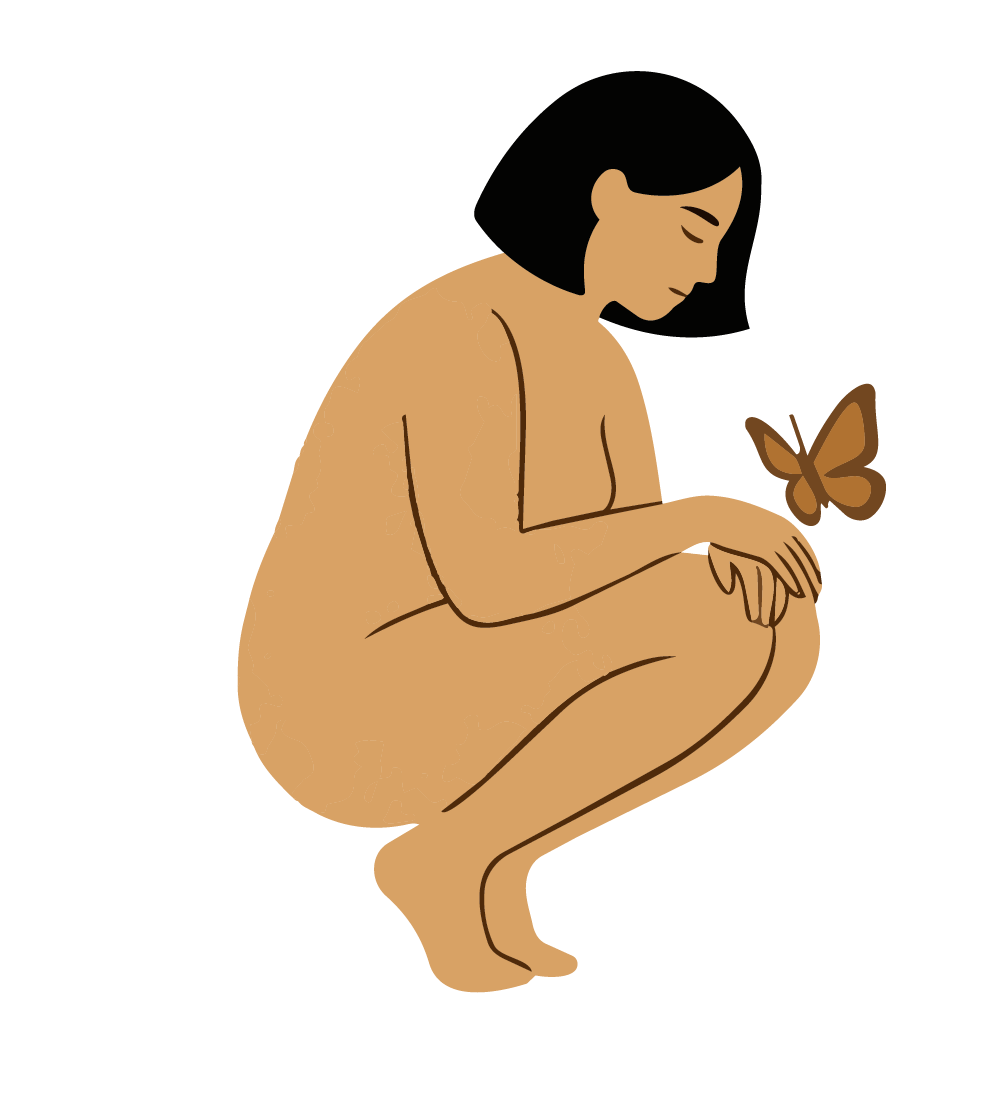
Wonder is an open response to what exceeds expectation. It may involve surprise, beauty, strangeness, curiosity, reverence, delight, or a temporary suspension of certainty. Wonder can arise through a landscape, a body, a sound, a scientific idea, a child’s question, a memory, a relationship, or an ordinary detail newly noticed.
Wonder is sensual because it begins in contact. Something is seen, heard, touched, tasted, imagined, or understood in a way that enlarges attention. The experience does not need to be extraordinary to matter. Wonder can make the familiar available again.
Wonder and attention
Wonder interrupts automatic perception. It invites a person to stay with an experience before reducing it to a category or use. A shell, face, movement, or pattern may become more than background when attention has enough time to receive it.
Attention does not have to be passive. Asking questions, looking closer, changing perspective, or listening again can deepen wonder. The aim is not to possess the object through knowledge, but to allow knowledge and mystery to remain together.
Wonder and curiosity
Curiosity gives wonder a direction. It asks what else might be true, how something works, where it came from, or what it means to another person. Curiosity becomes respectful when it does not treat people as puzzles owed to the observer.
A person can be curious about another body or culture without claiming access. Consent and humility protect wonder from becoming inspection. The unknown is not an invitation to cross a boundary.
Wonder and the body
Wonder can be felt as widening, stillness, warmth, tingling, tears, laughter, or a changed sense of scale. These responses are embodied interpretations, not proof that an experience is universally significant. Another person may feel calm, indifferent, or overwhelmed by the same encounter.
Wonder can also be protective when the nervous system needs predictability. A person who has experienced trauma, sensory overload, or exclusion may need safety before openness feels possible. Respecting this pace keeps wonder connected to choice.
Wonder and beauty
Beauty often evokes wonder, but wonder is not limited to what is conventionally beautiful. A complex structure, an ageing body, a difficult truth, a repaired object, or a sudden act of care may inspire wonder through depth rather than polish.
Wonder can loosen rigid standards. It makes room for forms and lives that a culture has taught people not to notice. In this way, aesthetic attention can become a practice of justice.
Wonder and uncertainty
Wonder tolerates a period before explanation. This does not mean rejecting evidence or treating every mystery as a revelation. It means allowing a question to remain alive while information is gathered.
Uncertainty can feel vulnerable because it reduces control. A person may want to close the question quickly with a judgement. Wonder offers another option: remain oriented, notice what is known, and stay open to revision.
Wonder and learning
Learning can begin in wonder because wonder makes attention feel worthwhile. A person may follow a question through reading, observation, conversation, practice, or experiment. The pleasure is not only in reaching an answer but in discovering better questions.
Education can protect wonder when it values inquiry, sensory access, imagination, and lived knowledge. It can extinguish wonder when it treats curiosity as distraction or measures every response against one approved form.
Wonder and relationship
People can experience wonder in the presence of another person who remains partly unknown. Intimacy does not mean completing the other person’s story. It means having enough trust to keep discovering one another while respecting privacy and change.
Wonder can support erotic and sensual connection when it replaces assumption with attention. A partner’s response is not a performance to predict but information to meet. Asking can become a form of tenderness.
Wonder and ordinary life
Wonder does not require travel, wealth, youth, or exceptional talent. It can arise in washing, cooking, tending a plant, hearing a familiar voice, watching weather, or noticing how a room changes across the day. Ordinary wonder is available when life is not reduced to utility.
This availability is affected by conditions. Exhaustion, poverty, violence, discrimination, and constant demand can narrow attention. Inviting wonder should never become a way to blame people for not feeling uplifted in unjust circumstances.
Wonder and embodiment
Wonder can return a person to the specificity of the body. Instead of asking for an abstract feeling of transcendence, it may begin with the pressure of feet on the ground, the movement of breath, the taste of fruit, or the warmth of another person’s hand. The body is not an obstacle to wonder; it is one of the places where wonder becomes real.
Embodied wonder should remain consent-based. A guide, teacher, or partner can invite attention, but cannot decide what another person must feel. An experience becomes more trustworthy when the person can pause, interpret, and leave it in their own language.
Wonder and integration
After a surprising or expansive encounter, integration gives the experience a place in ordinary life. A person might write, speak, rest, make something, change a habit, or simply let the memory remain. Integration prevents wonder from becoming a brief high that must continually be intensified.
The meaning of wonder may become clearer later. There is no need to turn every moving experience into a lesson immediately. Sometimes the most honest response is to remember that something mattered before knowing exactly why.
Wonder can therefore be both an opening and a pause: a way to meet life with interest while allowing understanding to arrive in its own time.
It keeps perception porous without making the person defenceless or ungrounded.
It can remain gentle.
What this changes
Wonder gives sensual life a quality of openness. It allows beauty, uncertainty, learning, relationship, and ordinary perception to remain larger than immediate use. The practice is not to chase amazement, but to protect the capacity to be surprised by what is already alive.
The next useful entries are aesthetic attention, curiosity, attention, imagination, uncertainty, and awe.
Related entries
aesthetic-attention, curiosity, attention, imagination, uncertainty, awe, presence.