
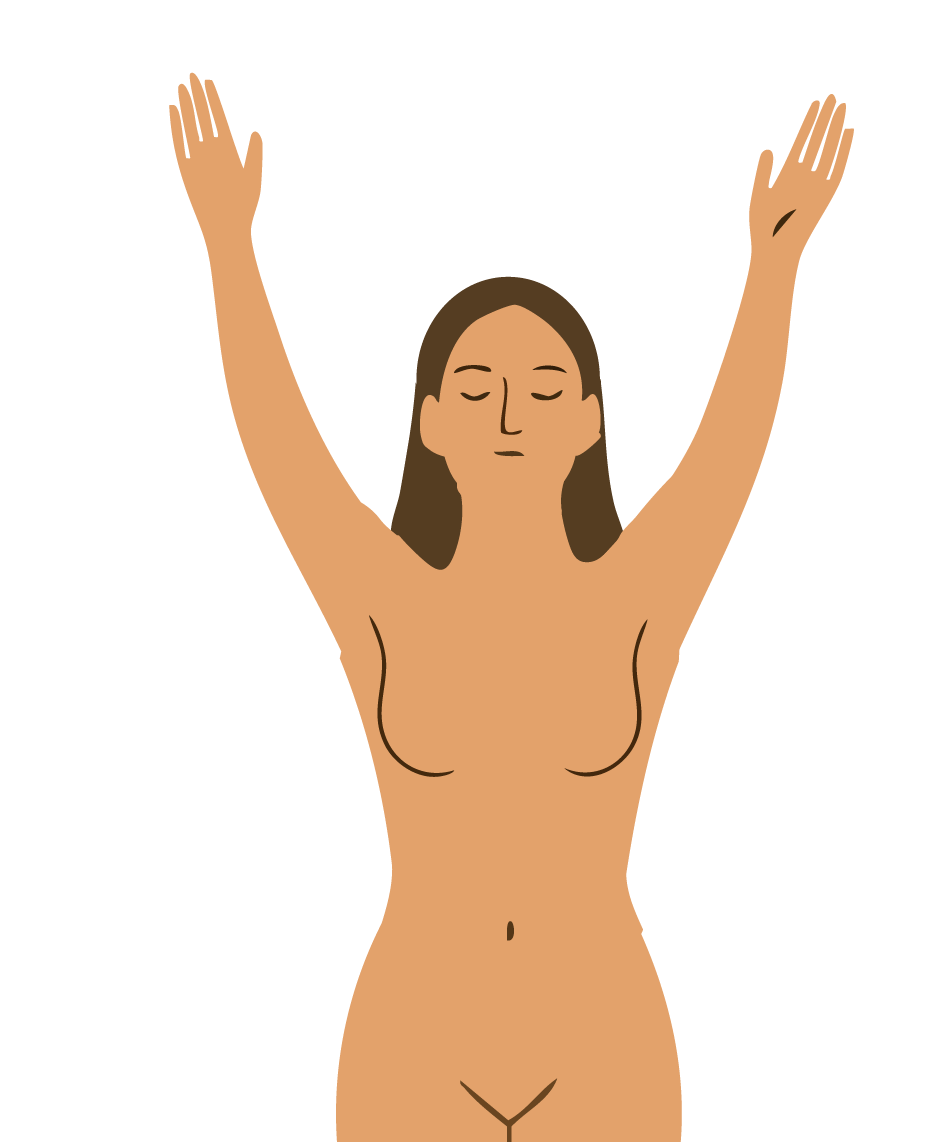
Beauty standards are social ideas about which bodies, faces, voices, movements, objects, and environments deserve approval. They often borrow the language of beauty, but they do more than describe perception: they organise attention, reward conformity, and influence access to desire, care, work, and belonging. Beauty itself remains an experience of pleasure, intensity, harmony, surprise, or meaning; standards are the rules that attempt to govern that experience.
A sensual understanding of beauty does not treat it as a fixed property that some people possess and others lack. It asks how perception is formed, whose preferences are made authoritative, and what becomes possible when people can encounter beauty without being required to perform it.
Beauty and perception
Beauty begins in an encounter between a perceiver and what is perceived. Attention, mood, expectation, familiarity, contrast, and context all affect the experience. The same place may feel beautiful at one time and oppressive or ordinary at another.
This does not make beauty unreal. It makes beauty relational. A person can trust their response while recognising that another person may perceive differently. Difference in perception need not become a contest over who is correct.
Beauty and the body
Bodies are often judged through narrow standards linked to youth, thinness, ability, race, gender, sexuality, and class. These standards are not neutral descriptions. They influence who receives attention, care, employment, desire, and protection.
Embodied beauty can be reclaimed when a person relates to the body as lived experience rather than as an object awaiting approval. This does not require liking every feature or rejecting all adornment. It means that appearance is one aspect of a life, not the price of dignity.
Beauty and culture
Culture teaches people how to notice and name beauty. Music, clothing, architecture, food, gesture, landscape, ceremony, and storytelling carry aesthetic knowledge across generations. Cultural forms can offer belonging and continuity.
Culture can also enforce hierarchy when one group’s preferences are treated as universal. A sensual education should widen the field of perception rather than replace one standard with another. Curiosity can honour difference without turning another culture into decoration.
Beauty and power
Beauty standards become coercive when they determine who is considered credible, safe, professional, feminine, masculine, desirable, or worthy of care. People may spend significant time, money, pain, and attention trying to become legible within an ideal that keeps moving.
Resistance can include refusing a standard, adapting it, playing with it, or using it on one’s own terms. The choice belongs to the person. No one should be required to display nonconformity in order to prove liberation.
Beauty and pleasure
Beauty can create pleasure through colour, proportion, texture, rhythm, scent, sound, movement, or emotional resonance. The pleasure may be quiet and non-possessive. One can be moved by a body, place, or artwork without needing to own it or gain access to it.
Beauty becomes more generous when it does not demand consumption. Looking can be a form of appreciation, but another person’s beauty does not create a claim on their time, attention, or body.
Beauty and ageing
Ageing changes skin, movement, voice, energy, and social position. When beauty is tied to youth, these changes are framed as loss rather than transformation. A wider aesthetic field can notice texture, history, expressiveness, humour, steadiness, and the particularity of an ageing body.
Respecting ageing does not mean pretending that all cultural pressures have disappeared. It means refusing the idea that a person becomes less sensual or less worthy as their body changes.
Beauty and imperfection
Many aesthetic traditions value irregularity, weathering, asymmetry, patina, and trace. Imperfection can reveal time and use. It can also challenge the demand that bodies remain smooth, controlled, and permanently available for evaluation.
Imperfection should not become a new requirement. A person may enjoy polish, symmetry, or transformation. Freedom means that no aesthetic preference has to become a compulsory identity.
Beauty and place
Places can feel beautiful because they offer orientation, memory, shelter, scale, or connection with more-than-human life. Access to beauty is affected by pollution, segregation, poverty, disability barriers, and displacement. Public beauty is therefore connected to justice.
Creating beauty can be a form of care: making a room welcoming, tending a garden, preserving a language, cooking for others, or repairing a neglected space. The value may lie as much in the relationship as in the final appearance.
Beauty standards and commerce
Markets can turn insecurity into demand. When a feature is presented as a defect, products and services appear as the route back to acceptability. People may freely enjoy fashion, cosmetics, exercise, medicine, or adornment, but freedom is harder to assess when refusal is punished socially.
Consumer choice does not erase the environment that produced the choice. A sensual ethic can hold both personal pleasure and structural analysis. The question is not whether an individual is allowed to care about appearance, but whether appearance has become the condition for being treated as fully human.
Beauty standards and resistance
Resistance can take many forms: pleasure in a body that has been rejected, refusal of painful correction, collective celebration, artistic transformation, or simply the decision to stop explaining one’s appearance. Resistance does not have to be public to be meaningful.
People may also use a standard strategically or play with it erotically and aesthetically. The same act can feel freeing in one context and compulsory in another. Self-trust matters more than a prescribed politics of appearance.
Conversation can help reveal the difference between appreciation and evaluation. Instead of asking whether a body meets an ideal, we can ask what the body is expressing, experiencing, creating, or asking for. This shift returns attention to the person’s lived reality.
What this changes
Beauty becomes an invitation to perceive and participate, not a ranking system for bodies. It can be sensual, cultural, political, private, and shared. When beauty is released from compulsory standards, more forms of life become available to attention.
The next useful entries are aesthetic judgment, pleasure, perception, expression, body image, and place.
Related entries
aesthetic-judgment, pleasure, perception, expression, body-image, place, visibility.