
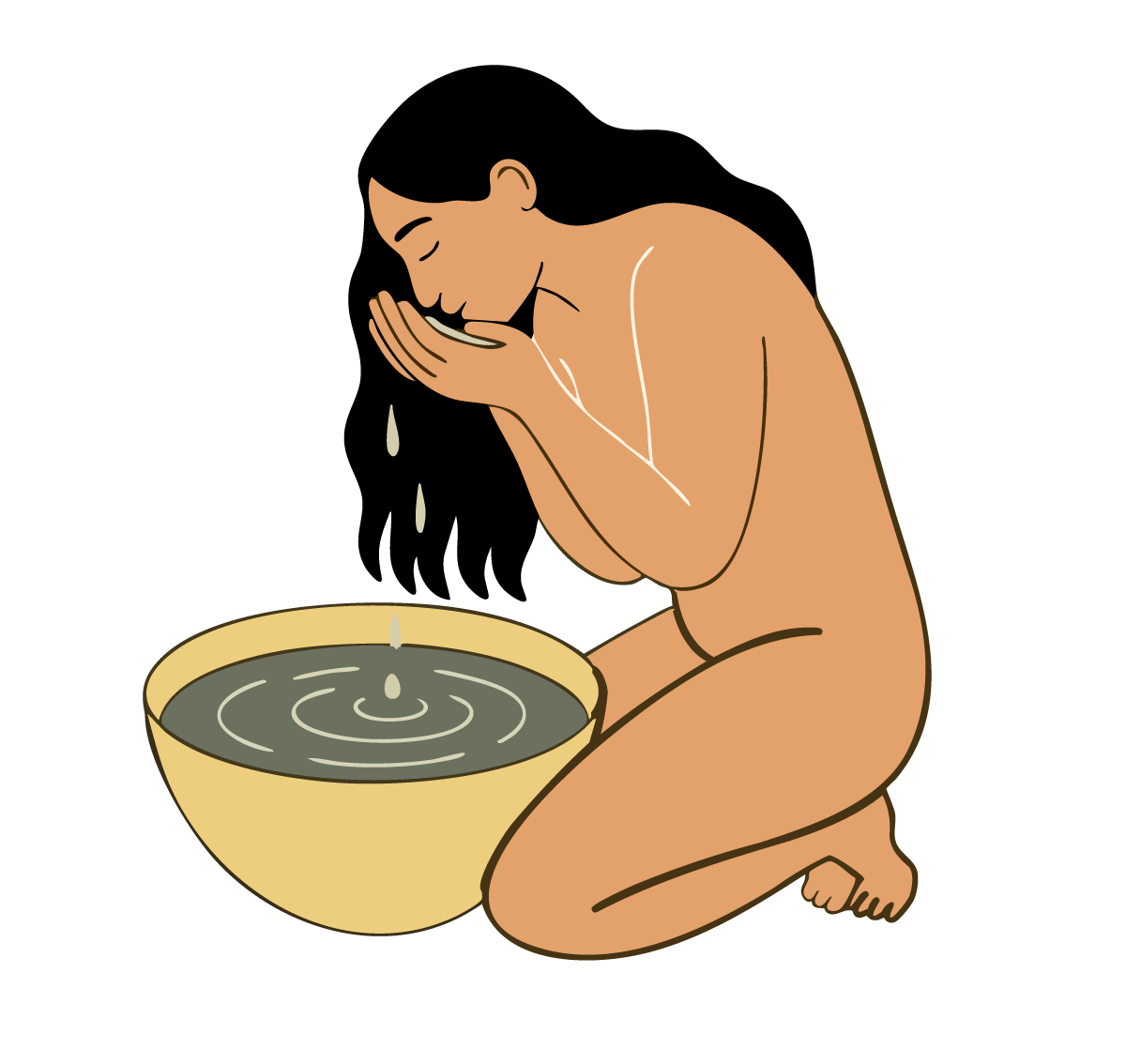
Learning is a change in what a person can notice, understand, feel, or do. It may involve information, skill, perception, language, relationship, or judgement. Sensual learning is not limited to learning about the senses. It includes learning through the body: discovering pace, recognising a boundary, refining attention, developing coordination, or becoming able to remain present with more complexity.
Learning is often imagined as the transfer of knowledge from an expert to a beginner. Teaching can help, but learning is an active relationship between the person, the material, the environment, and the meaning it carries. The same instruction will not produce the same result for every body. Capacity depends on prior experience, access, culture, energy, safety, and opportunity to practice.
Learning changes attention
At first, a new practice may require deliberate effort. With repetition, some elements become easier to notice or coordinate. This does not mean the body has become mechanical. It means attention can be freed for finer distinctions. A musician hears timing; a cook senses texture; a lover notices a partner’s changing rhythm; a person learning boundaries recognises the moment before automatic agreement.
Attention can also learn to ignore. Social environments train people to overlook pain, suppress desire, or treat certain bodies as inconvenient. Learning therefore needs ethical examination. Increased skill is not automatically increased wisdom. We must ask what the practice makes more available and what it teaches us to disregard.
Learning through repetition
Repetition supports learning when it is varied enough to build flexibility. Repeating one exact movement in one exact setting may create competence there but not elsewhere. Sensual practice can change pace, context, sensory input, partner, language, or level of support so that the capacity can travel.
Repetition also needs rest. Memory and coordination are affected by fatigue, stress, illness, pain, and attention. A person who cannot perform under pressure may still be learning. Evaluating only the visible result can miss the quiet changes that are preparing future capability.
Learning through feedback
Feedback is information about the relationship between an action and its effect. It may come from a teacher, a partner, an instrument, the environment, or the person’s own body. Useful feedback is specific enough to act on and respectful enough to preserve experimentation.
Feedback becomes harmful when it humiliates, overrides self-knowledge, or treats one standard as universal. “That movement is wrong” gives less useful information than “when the pace increased, your balance changed; would you like to try it with more support?” A learning environment makes correction compatible with dignity.
Learning and consent
Consent applies to the learning relationship as well as the exercise itself. A participant may agree to instruction without agreeing to public demonstration, touch, emotional disclosure, recording, or interpretation. The teacher should explain what will happen and make refusal ordinary.
There is a difference between a productive challenge and a coerced exposure. Challenge expands capacity when the person can choose the pace, understand the purpose, and stop without punishment. Pressure calls the person’s reluctance a defect and makes belonging depend on compliance.
Learning and difference
People learn through different routes. Some need to see, some to hear, some to move, some to write, some to observe before joining, and many use several forms at once. Accessibility is not a modification added after the “real” teaching. It is part of designing a situation in which learning can occur.
Culture also shapes what counts as knowledge and how authority is recognised. A respectful teacher does not treat unfamiliar expression as lack of understanding. They ask what the learner already knows, what language feels accurate, and what assumptions the teaching carries.
Learning and unlearning
Some learning involves loosening an inherited pattern. A person may have learned that desire is dangerous, rest is lazy, touch must be earned, or disagreement causes abandonment. Unlearning is not achieved by declaring the old message false. New experience must become credible through repetition, relationship, and conditions that support a different response.
Unlearning can be disorienting because a familiar pattern once offered belonging or protection. Compassion makes change more sustainable. The person is not foolish for having adapted to their environment; they are learning what else may now be possible.
Learning and motivation
Motivation is not a fixed quantity inside the learner. It is influenced by relevance, autonomy, relationship, confidence, fatigue, reward, fear, and the design of the environment. A person may appear unmotivated when the task is inaccessible, the purpose is unclear, or previous correction has made participation unsafe.
Sensual learning becomes more durable when the person can connect the practice with values that matter to them. Curiosity, pleasure, independence, connection, and creative expression can all support sustained attention. External praise may help, but it cannot replace a meaningful relationship with the activity.
Learning through failure
Failure can provide information when the conditions make it survivable. A person needs to know what was being attempted, what changed, and how to try again. Shame is not a reliable teacher. It narrows attention toward self-protection and can make experimentation feel dangerous.
In a sensual practice, a missed rhythm, awkward movement, or misunderstood cue can become useful if the response is patient and specific. The learner can pause, ask, repair, and return. The goal is not to avoid every mistake, but to build a relationship with mistakes that does not sacrifice dignity.
Every attempt can become information about the next supportive condition.
Learning becomes humane when the person remains more important than the performance.
That principle protects curiosity while skill is still forming.
Patience gives new capacity room to take root.
Support makes persistence less lonely and more possible, over time, for many learners.
What this changes
Learning makes sensuality developmental. It allows people to become more capable without requiring performance, uniformity, or a final state of mastery. The body is not a fixed instrument waiting to be optimised. It is a living participant in attention, practice, relationship, and change.
The next useful entries are reflection, memory, attention, practice, curiosity, and accessibility.
Related entries
reflection, memory, attention, practice, curiosity, accessibility, integration.