
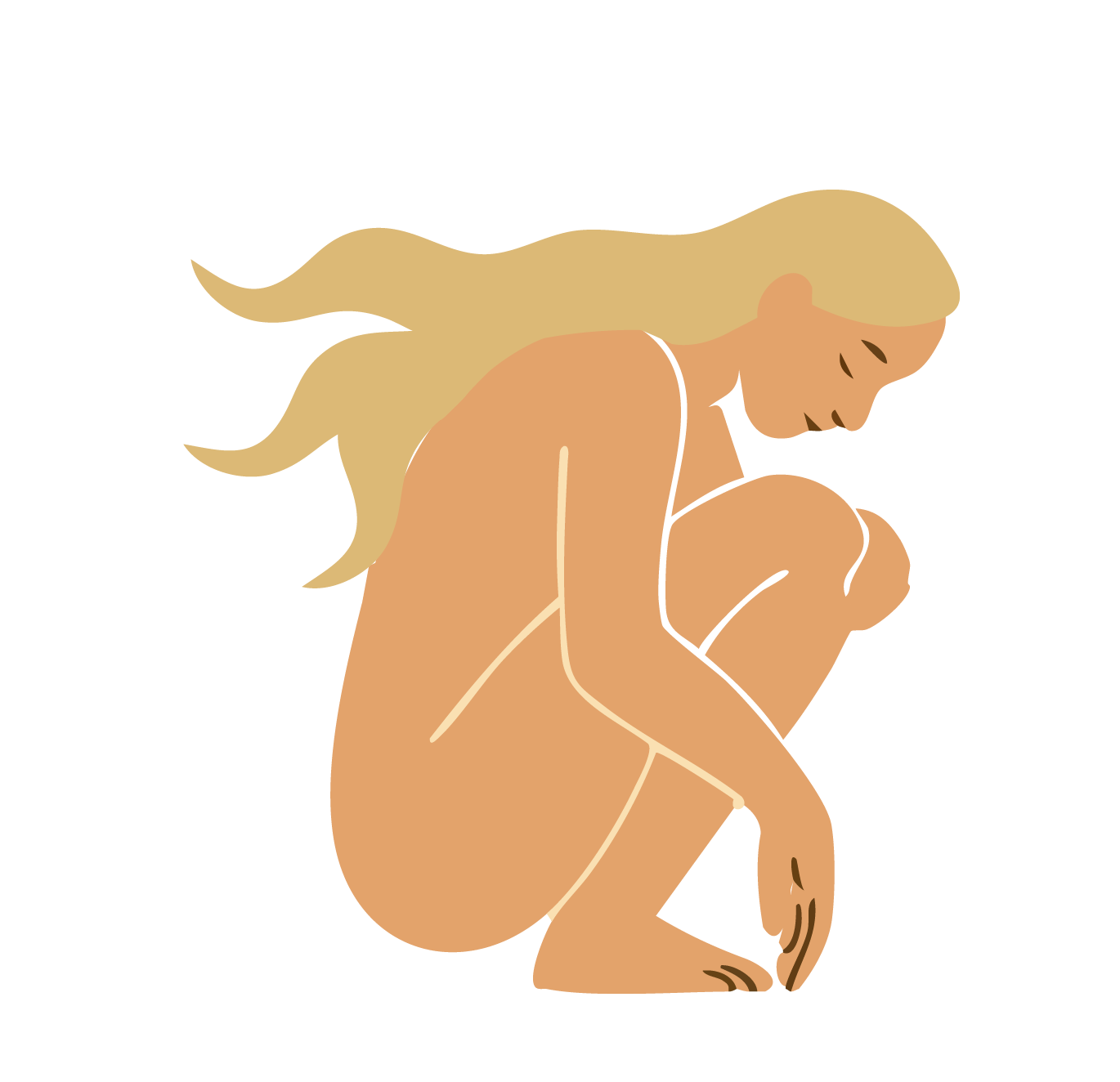
Shame is the painful experience of feeling fundamentally defective, exposed, contaminated, or unworthy of relationship. It often differs from guilt, which concerns an action and its consequences. Shame says “there is something wrong with me”; guilt can say “I did something harmful and need to respond.” The distinction is not absolute, but it matters because shame tends to reduce the capacity for honest action.
In brief
Shame matters to sensuality because bodies, pleasure, desire, appearance, illness, disability, gender, sexuality, appetite, aging, and need are common sites of social judgment. A person may learn to monitor the body before they can enjoy it. They may hide hunger, touch, sweat, desire, fatigue, grief, or difference to avoid becoming unacceptable.
Shame is personal and social. It can arise from an action, but it is also taught by family, religion, race, gender, class, media, medicine, law, and institutions. A sensual field should not ask people to overcome shame privately while leaving the conditions that produce it untouched.
Shame is not guilt
Guilt can focus attention on behavior: what happened, who was affected, and what repair is needed. Shame turns attention toward the whole self as the problem. This can make a person hide, attack, submit, dissociate, or avoid the people and actions that could support change.
Reducing shame does not mean removing accountability. A person can reject humiliating self-condemnation while acknowledging harm. In fact, accurate responsibility often becomes more possible when the person is not defending against total annihilation.
Shame and the body
Shame is embodied. The face heats or drops. The body curls inward, freezes, hides, becomes hyper-visible, or wants to leave. A person may feel watched even when no one is looking. These reactions are shaped by memory, culture, current power, and the body’s attempt to protect belonging.
Body-based practice can support awareness, but it can also intensify shame if it treats one appearance, posture, weight, skin, level of flexibility, or sensory style as the standard. “Feel your body” is not an innocent instruction when the body has been a site of surveillance or harm. Offer external, relational, and sensory options.
Sexual and sensual shame
Sexual shame teaches people that desire, pleasure, arousal, orientation, fantasy, touch, or sexual history makes them less worthy. It can also appear as pressure to be sexually available, attractive, experienced, liberated, or constantly expressive. Both repression and compulsory performance can disconnect a person from chosen sensuality.
Reclaiming pleasure does not require public disclosure or a particular sexual life. A person can resist shame through privacy, a boundary, a relationship, a garment, a meal, a movement, a name, or the decision not to participate. Freedom includes the right to define what remains one’s own.
Shame and identity
Stigma attaches shame to categories of personhood. A person may internalize messages that their race, gender, sexuality, disability, class, religion, age, or culture is embarrassing or dangerous. The resulting pain is not evidence that the identity is wrong. It is evidence that social judgment has entered the body.
Community can counter shame through recognition and shared language, but communities can also produce new rules about what counts as authentic. Healing is not always a return to group belonging. It may involve chosen community, privacy, political action, or an identity that remains provisional.
Shame can survive even after a person intellectually rejects the message that produced it. Change may therefore involve repeated experiences of safety, recognition, pleasure, and choice rather than one convincing argument alone. That persistence is normal.
Shame and visibility
Visibility can challenge erasure and create connection, but it can also create risk. Asking people to be visible in the name of authenticity may expose them to harassment, family violence, employment loss, or unwanted interpretation. A person’s right to be unseen is not evidence of shame.
Ethical visibility asks who is watching, who controls the image, what the consequences are, and whether the person can withdraw. Sensual representation should not turn vulnerability into content without consent.
Privacy can therefore be a positive sensual practice. A person may choose clothing, touch, language, or pleasure for themselves rather than for an audience. What is not displayed is not necessarily denied; it may be protected.
In practice
Shame-sensitive practice uses accurate language, privacy, choice, and a slow pace. Name the difference between a behavior and a person. Ask what the person wants support with. Avoid surprise touch, public interpretation, compulsory eye contact, body comparison, or exercises that require exposure.
Persistent shame can accompany depression, trauma, eating disorders, self-harm, sexual pain, substance use, and social withdrawal. Practitioners should refer when distress or impairment is significant. Do not promise that disclosure or catharsis will resolve shame, and do not use shame to motivate compliance.
Language should not assume that every person wants to replace shame with pride. Some people prefer neutrality, privacy, humor, anger, community, or practical support. The person’s chosen route matters more than the facilitator’s preferred emotional outcome.
Sensuality as human capacity
Working with shame develops self-compassion, body awareness, agency, pleasure, discernment, and the ability to remain in relationship without hiding the whole self. Competent functioning includes recognizing a shaming message, separating action from identity, setting a boundary, seeking support, and making repair without self-annihilation. The capacity can be constrained by stigma, abuse, cultural repression, perfectionism, poverty, or public surveillance.
The Institute of Inner Technology’s emphasis on embodied intelligence and human capacity is relevant because shame can narrow attention and agency precisely where people need the ability to choose. Practice must create conditions in which a person can feel without being exposed to unnecessary harm.
What this changes
Shame explains why sensuality cannot be restored through stimulation alone. A person may have access to beauty, touch, food, sex, movement, or rest and still be unable to receive them without judgment. The work is not to force openness. It is to make contact less dangerous and the self less punishable.
The next useful entries are body image, self-compassion, sensual repression, sexuality, pleasure, and boundaries.
Related entries
body-image, self-compassion, sensual-repression, sexuality, pleasure, boundaries, identity.