
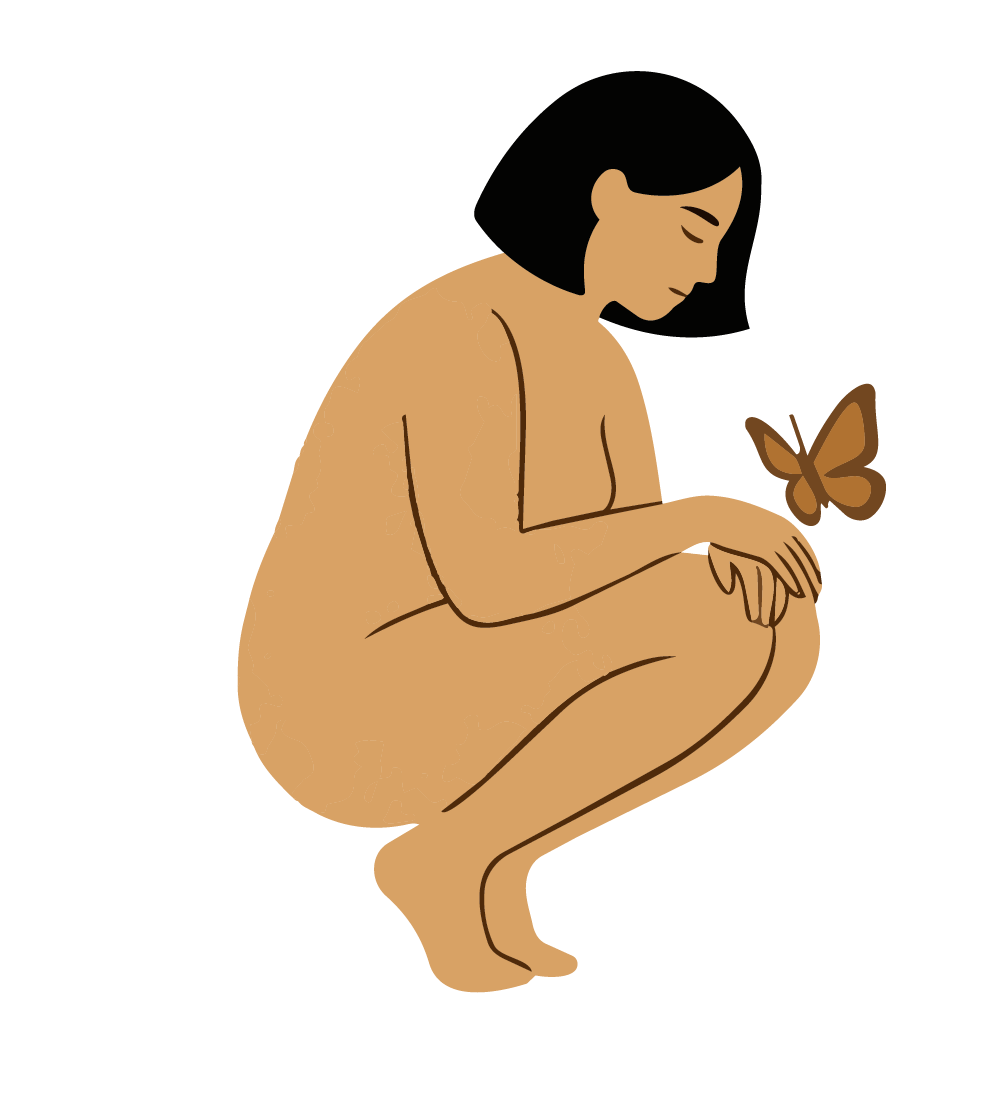
Grief is the changing experience of living with loss. It can follow the death of a person, but also the end of a relationship, a home, a body’s former capacity, a future imagined, a community, a species, or a way of life. Grief is emotional, physical, social, cultural, sensory, and practical. It is not a single stage that everyone completes in the same order.
In brief
Grief matters to sensuality because loss changes how the world arrives. A familiar room can become strange. A smell can bring someone near. Food can lose taste, music can become unbearable, or a season can carry an absence that language cannot hold. The senses keep relation alive, sometimes as comfort and sometimes as shock.
Grief is not evidence that a person is failing to move on. It is not proof that the relationship was healthy, and it is not automatically a disorder. Some grief needs clinical support, especially when it is prolonged, dangerous, or severely disabling, but ordinary mourning should not be medicalized simply because it is painful.
Loss changes perception
After loss, perception can become sharply selective. The person notices the empty place at the table, the missing voice, the clothes, the route once taken together, or the time of day when a message used to arrive. The world is full of reminders, but reminders do not all carry the same meaning.
Sensory memory can bring a person into contact with what is absent. This can be welcome, frightening, or both. A scent may soothe one day and dismantle the day after. Grief does not require a stable relationship to reminders. It requires room for the relationship to change.
Grief is embodied
Grief can alter sleep, appetite, energy, breathing, digestion, posture, attention, pain, and the experience of time. Some people feel heavy or slowed. Others become restless, numb, or intensely active. There is no single bodily signature that proves grief, and bodily responses can also reflect illness, medication, stress, or depression.
Embodied grief deserves practical care: food that is possible to eat, rest without isolation, movement that is tolerable, medical attention when needed, warmth, company, and permission not to perform recovery. The body may need support before it can make meaning.
Grief and pleasure
Pleasure can return while grief remains. A person may laugh, desire touch, enjoy a meal, make art, or feel relief and then feel guilty for being alive. This guilt often reflects a cultural story that love must be proven through permanent suffering. But pleasure does not betray the lost. It can be one way life continues to move through the person.
There is no obligation to feel pleasure quickly, either. Sensual practices should never be used to force gratitude, release, forgiveness, or a return to normal. The body’s timing matters. A person can accept a moment of beauty without treating it as evidence that the grief is over.
Grief and ritual
Ritual gives grief a form that can be shared. Lighting a candle, cooking a dish, walking a route, naming the dead, singing, keeping an object, visiting a place, or marking an anniversary can help a community recognize that something has changed. Ritual does not erase loss. It gives loss a social address.
Rituals are culturally specific. A practice meaningful to one person may feel invasive or empty to another. Facilitators should not impose spiritual interpretations, require disclosure, or treat public expression as more authentic than private mourning. Silence, refusal, and ordinary routine can also be forms of ritual.
Grief may also involve ambiguous loss: someone is physically present but changed, a relationship ends without explanation, or a future disappears without a public event. Such losses can be difficult to recognize because there is no shared ceremony. Naming the ambiguity can be a form of care.
Ecological grief
Ecological grief arises when living systems, species, landscapes, seasons, and futures are damaged or lost. It may be anticipatory, cumulative, inherited, or connected to a specific place. The grief can be personal and political at once. A person may mourn a childhood landscape while also recognizing the systems that produced its destruction.
Ecological grief needs more than emotional release. It needs accurate information, community, action, rest, and forms of care that do not promise restoration where restoration is impossible. Grief can become a source of responsibility without being romanticized as moral superiority.
In practice
Grief-supportive practice begins with permission: there is no correct emotional sequence. Offer choices about talking, silence, movement, sensory objects, ritual, privacy, and time. Ask what the person needs today rather than assuming the same need will remain. Be attentive to practical concerns such as food, medication, childcare, housing, finances, and safety.
Refer to appropriate clinical or crisis support when there is persistent inability to function, severe depression, self-harm risk, substance escalation, psychosis, complicated bereavement, or medical concern. A facilitator should not promise that a body-based exercise will release grief or recover a lost memory. Grief should not be turned into a performance of transformation.
Support should also make room for cultural and religious difference. Mourning practices may involve particular foods, clothing, music, timing, touch, prayer, or silence. Ask what is meaningful rather than treating one model of expression as universal.
Sensuality as human capacity
Grief develops the capacity to remain in contact with love, absence, change, and uncertainty. Competent functioning does not mean feeling better on schedule. It includes receiving support, allowing memory to change, recognizing moments of pleasure without guilt, and making meaning without forcing closure. The capacity can be constrained by isolation, cultural silence, economic pressure, trauma, medical illness, or environments that demand productivity immediately after loss.
The Institute of Inner Technology’s emphasis on metabolization and practice is relevant here: experience becomes livable through contact, containment, differentiation, integration, and enactment. Grief cannot be solved by explanation alone; it needs time, relationship, and a form of life that can hold what happened.
What this changes
Grief shows that sensuality is not only the capacity to enjoy life. It is also the capacity to remain affected by what has mattered. The senses keep opening onto a world that has changed. The task is not to close them or to turn loss into a lesson too quickly, but to find forms of relation in which memory, care, pleasure, and responsibility can coexist.
The next useful entries are memory, ritual, care, ecological empathy, pleasure, and meaning-making.
Explore with I AWAKE
For reflection on old pain and the patterns that can follow it into present life, see They said Time would…, a guided sensual seven-day journey by Camilla Wellton.
For a short definition, see grief in the I AWAKE glossary
Further reading: Time Passed. The Pattern Came With You.
Related entries
memory, ritual, care, ecological-empathy, pleasure, meaning-making, place.