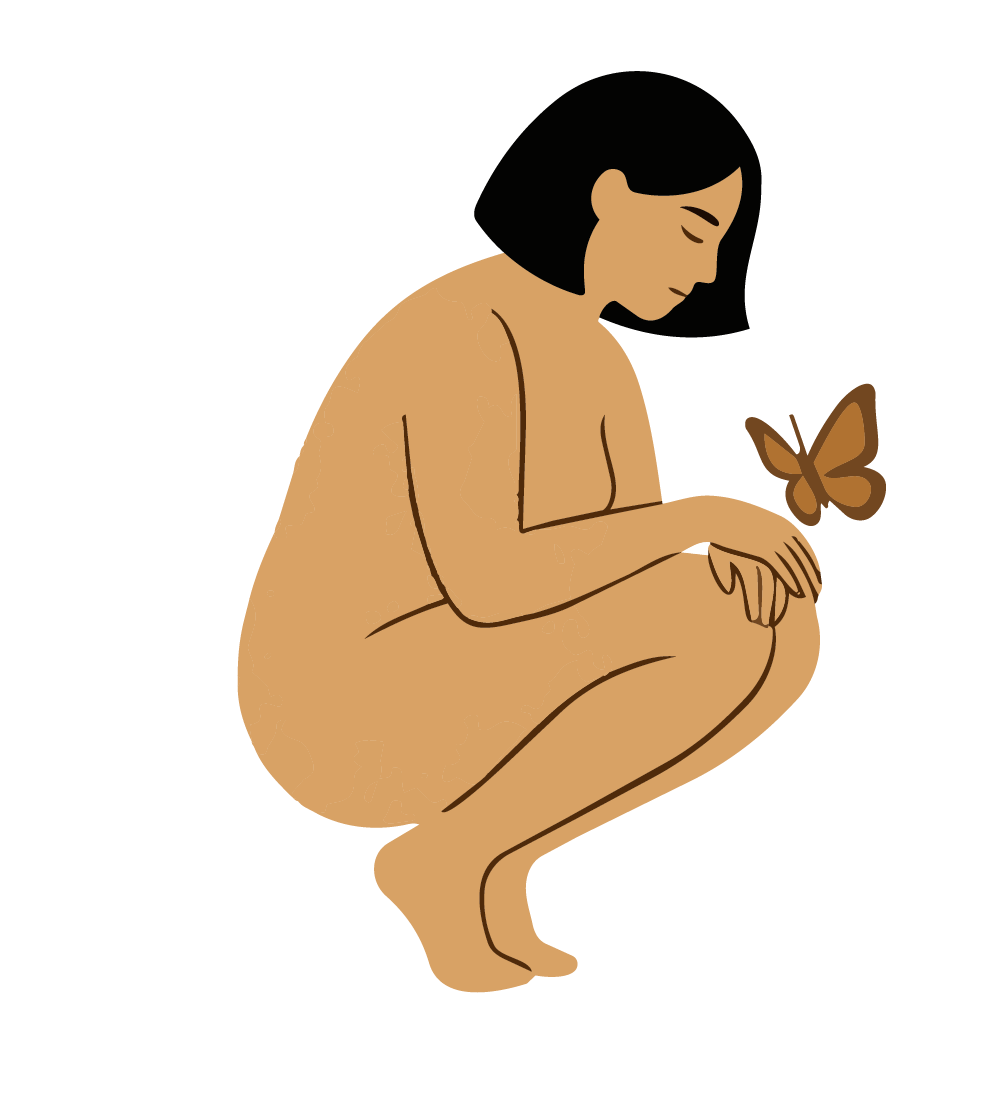
Desire is directed wanting. It is the body-mind system leaning toward what appears needed, relieving, beautiful, forbidden, beloved, pleasurable, meaningful, or possible. Desire can be sexual, but it is not only sexual. It can move toward food, knowledge, touch, freedom, sleep, recognition, justice, beauty, home, God, art, revenge, or silence.
The body leans before the story is complete
Desire often arrives before it becomes respectable. A pull. A heat. A fantasy. A reach. A restlessness. A sentence that starts with if only. Then the mind hurries in to explain, justify, deny, decorate, or condemn it.
That does not mean every desire is truth. Some desires are signals of life. Some are repetitions of deprivation. Some are wounds looking for a doorway. Some are culturally installed. Some are wise but inconvenient. Some are familiar loops wearing new perfume.
Desire is not the enemy. Unexamined desire is the problem. So is desire shamed so deeply that it can only return as compulsion.
In brief
- Desire is a directed form of wanting or longing.
- It differs from pleasure, which is the felt positive quality of experience.
- It differs from consent, which concerns permission, agreement, and conditions of ethical action.
- It is shaped by body, memory, attachment, culture, fantasy, power, and imagination.
Desire and pleasure
Desire points. Pleasure receives. That is too simple, but useful. Desire moves toward an object, person, state, image, future, or relief. Pleasure is what may or may not arise in the encounter.
This distinction matters because humans often desire things that do not actually please them. The message. The purchase. The person who repeats the old ache. The victory that leaves the body empty. The forbidden thing that matters mainly because it is forbidden. Desire can be intelligent, but it can also be trained by absence.
Desire and consent
Desire is not consent. Wanting something does not automatically make it ethical, mutual, timely, safe, or wise. Consent is the practice of bringing desire into relation with another person’s agency, boundaries, and conditions.
A sensual culture must be able to hold both truths: desire deserves honest attention, and desire does not deserve automatic obedience. The point is not repression. The point is responsibility.
Desire as information
Desire tells us what the system is organized around. Need, fantasy, loss, hope, entitlement, creativity, hunger, eros, grief, ambition, boredom, or becoming. The work is to study desire closely enough that it stops pretending to be destiny.
Ask not only: what do I want? Ask: what does this desire believe it will give me? What history does it carry? What body state intensifies it? What future does it rehearse? What would happen if I neither obeyed nor exiled it?
The Sensual Institute perspective
The Sensual Institute treats desire as one of the great teachers of sensual intelligence. Desire reveals direction. It also reveals pattern. Mature desire is not desire made polite. It is desire brought into attention, embodiment, consent, and meaning.
Explore with I AWAKE
To explore what you hope a desired life will let you feel, see I Want It All, a guided sensual seven-day journey by Camilla Wellton.
For a short definition, see desire in the I AWAKE glossary
Related entries
pleasure, eros, longing, consent, aphrodite, intimacy, sensual-repression, sensuality.
Within the Sensuality Taxonomy: This entry forms part of the Sensual Encyclopedia. See the foundational definition of sensuality and the Sensuality Taxonomy for its wider conceptual context.
Within the Sensuality Taxonomy: This entry forms part of the Sensual Encyclopedia. See the foundational definition of sensuality and the Sensuality Taxonomy for its wider conceptual context.
Within the Sensuality Taxonomy: This entry forms part of the Sensual Encyclopedia. See the foundational definition of sensuality and the Sensuality Taxonomy for its wider conceptual context.