

This piece was originally published on Brainz magazine and is shared here as part of the Sensual Institute’s body of work.
This piece is about how love quietly taught many of us to become smaller. It explores the moment when being “good” became a survival strategy, how early relational rules shaped the nervous system, and why those patterns can linger long after we know better. It’s an invitation to name what formed you, to question inherited ideas of love, and to begin reclaiming a way of being that doesn’t require self-erasure to belong.
Somewhere along the way, you learned that being loved meant being good.
Not real.
Not whole.
Not fully alive.
Just… good.
You became the one who caused no waves.
You called it kindness.
You did it for survival. Because in the earliest rooms you entered, love came with terms and conditions.
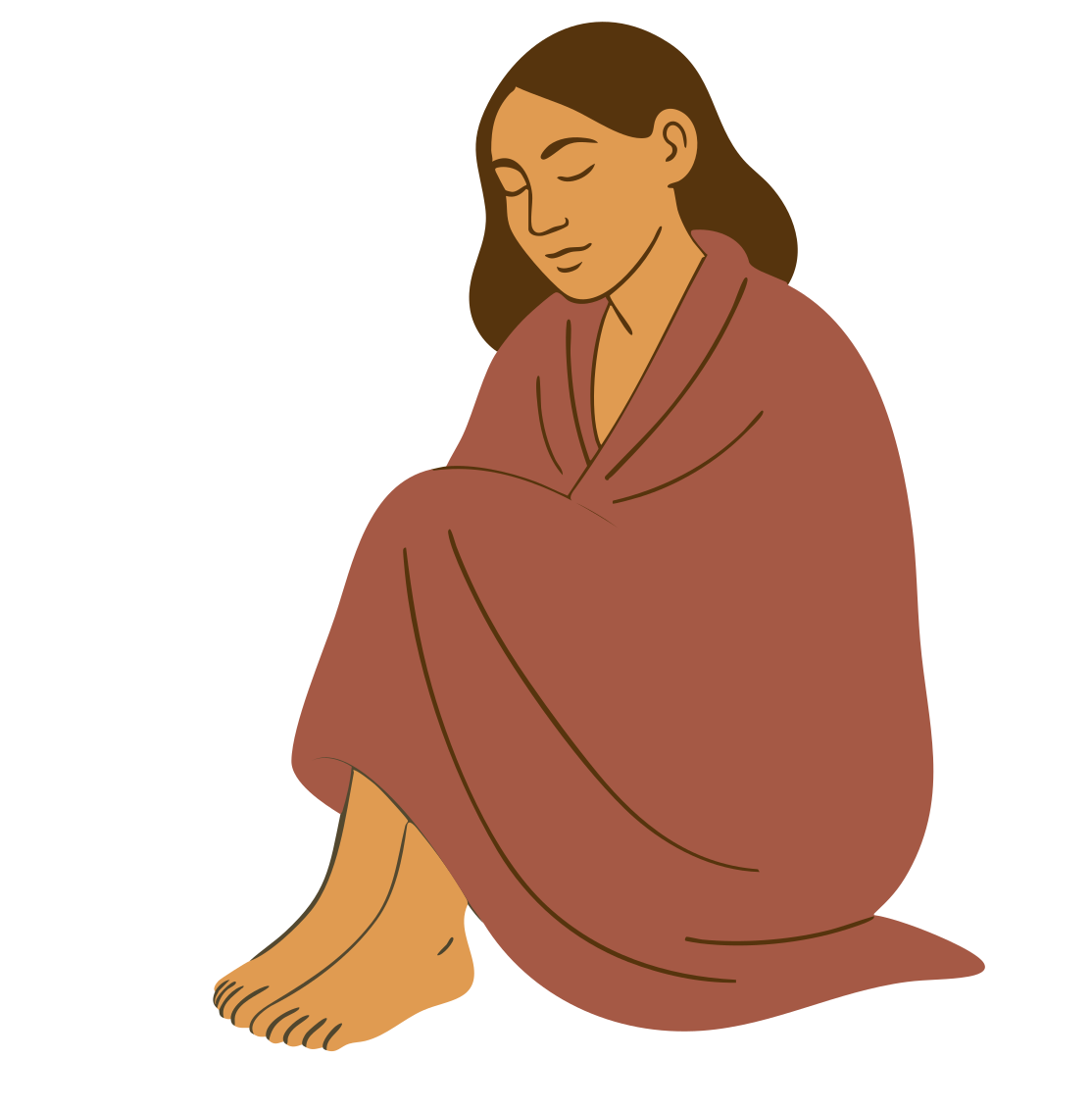
And maybe now, even decades later, you still feel it in your nervous system, that flicker of hesitation before you express a need.
There is a kind of love that doesn’t require you to disappear.
The invisible framework and it’s companion, The soft return, aren’t about fixing you.
How “being good” became a strategy, not a personality.
And how that strategy might now be standing in the way of the intimacy, creativity, and freedom you long for.
No more pleasing than just to be allowed to stay.
Together.
