You’ve been to therapy. You’ve journaled. You’ve downloaded the apps, done the breathwork, read the books with the hopeful titles.
And somewhere underneath all of that effort, there’s still a flatness. A distance from yourself you can’t quite name. A sense that you’re watching your own life from slightly outside your body.
If that lands somewhere in your chest right now, this is for you.
Your brain has been doing all the heavy lifting
Most of the personal development world, therapy included, operates from the neck up. It asks you to identify your patterns, reframe your thoughts, understand your triggers, build new narratives. And that work matters. It genuinely does.
But there’s a problem.
Your nervous system doesn’t speak in language. It speaks in sensation. In tightness across the shoulders. In the shallow breath you take before a difficult conversation. In the way your stomach drops before you even consciously register that something feels wrong.
Your body has been keeping score of everything your mind has tried to process, file away, or outthink. And it keeps that score in tissue, in posture, in the way you hold your jaw when you’re trying not to feel something.
Somatic healing is the practice of going back into that body not to fix it, not to diagnose it, but to listen to it.

So what does "Somatic" actually mean?
The word comes from the Greek soma, meaning body. Somatic healing is any approach to emotional and psychological wellbeing that works through physical sensation and body awareness rather than purely through thought or analysis.
It’s not a single technique. It’s a whole orientation. A way of understanding that the body is not just a vehicle for the brain, but an intelligent system that holds memory, emotion, and wisdom in its own right.
Somatic healing can look like:
- Noticing where in your body you feel an emotion before you name it
- Slowing down enough to feel the weight of your own feet on the floor
- Writing from sensation rather than from analysis
- Listening to sound or music and tracking what shifts physically in response
- Sitting with discomfort in the body instead of immediately trying to think your way out of it
None of this is mystical. It’s actually quite ordinary. It’s just that most of us have been trained, for years, to override these signals in favour of productivity, logic, and getting on with it.

How it differs from conventional therapy
Therapy is valuable. This isn’t a competition. But there’s a meaningful distinction worth understanding.
Traditional talk therapy works primarily through insight: you understand why you feel the way you do.
Somatic healing works through experience: you actually feel your way through it, in real time, in your body.
Think of it this way: you can understand intellectually that you’re allowed to take up space, that you’re worthy of love, that your childhood wasn’t your fault. You can understand all of that and still feel small. Still shrink in rooms. Still apologise for existing.
That gap between what you know and what you feel is where somatic work lives.
It’s also different from most mindfulness apps, which tend to offer calm without aliveness.
A guided meditation might quiet the noise for twenty minutes. But if you close the app and still feel like a stranger in your own skin, the noise was just paused, not addressed.
Why women, in particular, need this
This isn’t about biology. It’s about what women are taught to do with their bodies from a very young age.
Shrink. Contain. Perform. Manage. Be pleasant. Don’t take up too much space. Don’t want too much. Don’t feel too loudly.
The body learns those lessons. It internalises them at a cellular level. And then, years later, you find yourself in a therapist’s office or a meditation class wondering why you feel so disconnected from your own desire, your own pleasure, your own sense of self.
Somatic healing for women isn’t about fixing something broken. It’s about returning to something that was always there: a body that knows things, wants things, and has been waiting, quietly, for you to come back.
What somatic healing is not
It’s worth saying clearly: somatic healing is not a quick fix. It’s not a weekend retreat that resolves everything. It’s not a technique you do once and then you’re done.
It’s slow. It’s non-linear. Some days you’ll feel cracked open. Other days nothing will seem to shift. That’s not failure, that’s the actual texture of this work.
It also doesn’t require a clinical setting or a certified practitioner to begin.
There are accessible, structured ways to start working somatically on your own. Through writing, through sound, through guided exercises that bring you back into your body one small sensation at a time.
The body is not the problem
Here’s what most self-help gets backwards: it treats the body as something to manage… To calm down, to discipline, to push through.
Somatic healing treats the body as the source. As the place where the real information lives.
Your body already knows what your mind keeps avoiding.
The work isn’t about learning something new. It’s about slowing down enough to hear what’s already there.
If you feel drawn to exploring this deeper....
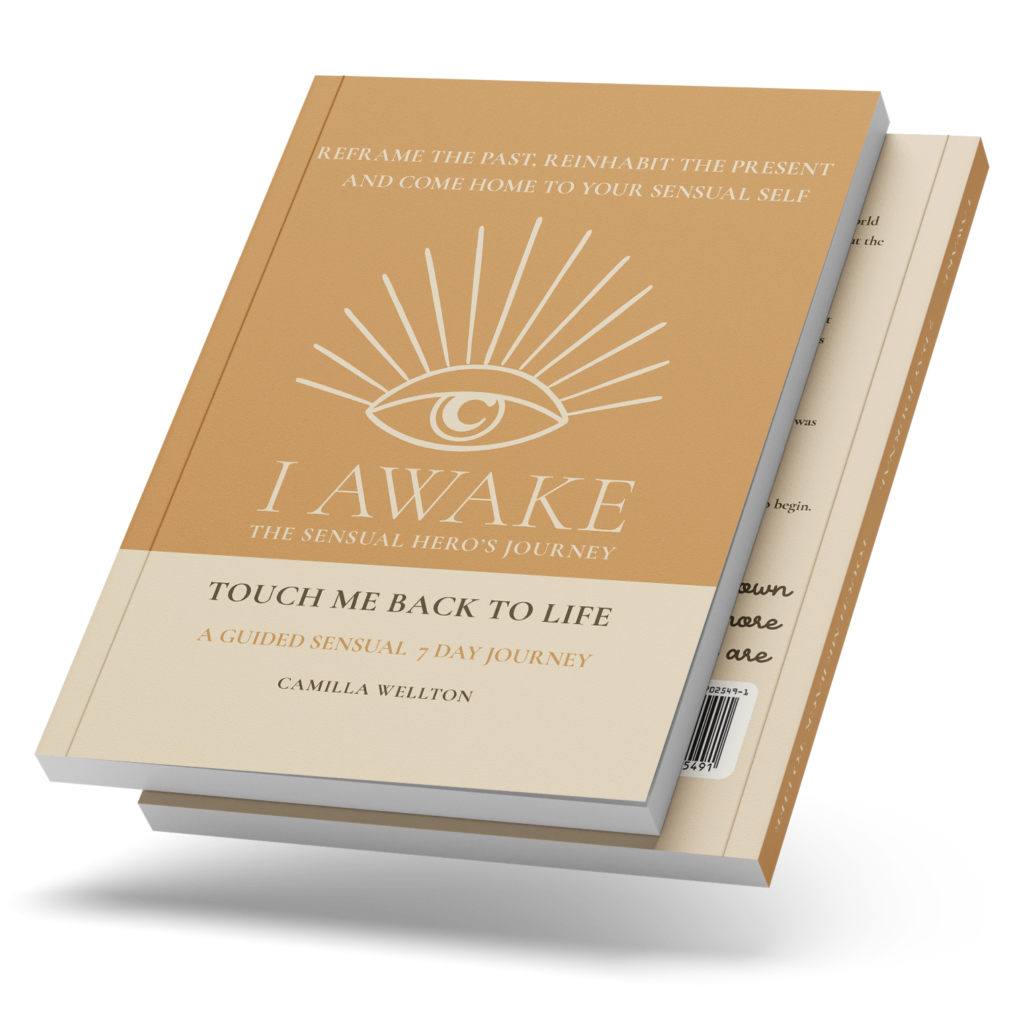
If this resonates, you can explore this more deeply through the Sensual Hero’s Journey framework and the I AWAKE book series, especially:
It works directly with the relationship between experience, nervous system regulation, and internal chemistry.
Because what most people call motivation is not something you have to create.
It is something your system produces, when it trusts that life will meet it.